
Tin bronze bushings – CuSn12, CuSn10P, CuSn10 and C90500
Copper with 10 – 12 % tin and little or no lead: harder (70 – 90+ HB), stronger (280 – 310 N/mm² minimum) and more wear-resistant than SAE 660, good in seawater, and lead-free for RoHS and drinking-water positions. CuSn12 is the German GBz12 and the Italian ex-B14; CuSn10P is the Polish B101, the British PB1 and the Russian БрОФ10-1; C90500 is SAE 62 gear bronze. They need a hard shaft and reliable lubrication – there is no lead to save them when the grease runs out.
Tin bronzes are the oldest bearing alloys: copper strengthened by tin in solution, with phosphorus (phosphor bronze) forming hard Cu₃P for extra wear resistance. Against the leaded grades they trade emergency lubrication and dirt embedding for higher load, fatigue and wear resistance.
- CuSn12 (EN 1982 CC483K, DIN GBz12 2.1052, ex UNI B14, nearest UNS C90800): Rm ≥ 280 N/mm², Rp0.2 ≥ 150, ≥ 90 HB (GZ / GC)
- CuSn10P / ZCuSn10P1 (PN B101, BS PB1, ГОСТ БрОФ10-1, EN CC481K CuSn11P-C nearest, SAE 65 class): Rm ≥ 310 N/mm², ≥ 90 HB – the hardest tin bronze
- CuSn10 (EN CC480K, DIN 2.1050): Rm ≥ 280, ≥ 70 HB – tougher, easier to machine, the general lead-free substitute for 660
- C90500 / SAE 62 (CuSn10Zn2, ZCuSn10Zn2, BS G1, JIS CAC403): Rm ≥ 276, 75 HB typical – gear bronze, strong and tough
- Shaft: hardened or 250 HB minimum, Ra 0.8 µm; lubrication continuous – oil preferred at speed
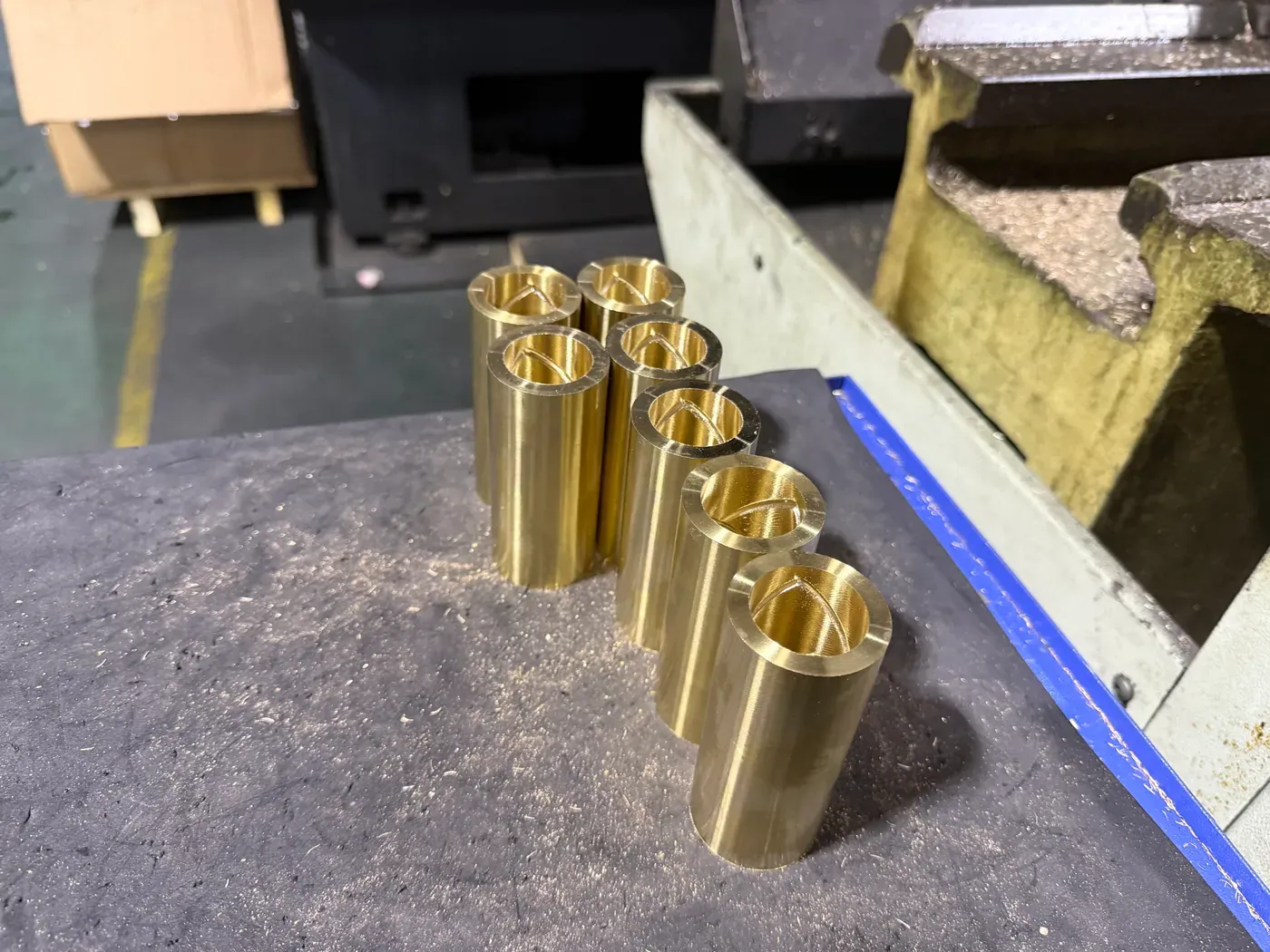
Chemical composition
CuSn12 · CuSn12
| Element | Range (% by mass) | Nominal (%) |
|---|---|---|
| Cu | 85.0–88.5 | 88 |
| Sn | 11.0–13.0 | 12 |
| Ni | ≤ 2.0 | — |
| P | ≤ 0.6 | — |
| Pb | ≤ 0.7 | — |
| Zn | ≤ 0.5 | — |
* Typical values per ASTM B505 / B271, EN 1982 and GB/T 1176 for the cast alloy; not a guarantee for a specific part. Test certificates (chemical analysis, hardness) are supplied on request with the order.
CuSn10P (ZCuSn10P1) · CuSn10P
| Element | Range (% by mass) | Nominal (%) |
|---|---|---|
| Cu | balance | 89 |
| Sn | 9.0–11.5 | 10 |
| P | 0.5–1.0 | 0.8 |
| Pb | ≤ 0.25 | — |
| Zn | ≤ 0.05 | — |
| Ni | ≤ 0.1 | — |
* Typical values per ASTM B505 / B271, EN 1982 and GB/T 1176 for the cast alloy; not a guarantee for a specific part. Test certificates (chemical analysis, hardness) are supplied on request with the order.
CuSn10 · CuSn10
| Element | Range (% by mass) | Nominal (%) |
|---|---|---|
| Cu | 88.0–90.0 | 89 |
| Sn | 9.0–11.0 | 10 |
| Ni | ≤ 2.0 | — |
| Pb | ≤ 1.0 | — |
| Zn | ≤ 0.5 | — |
| P | ≤ 0.2 | — |
* Typical values per ASTM B505 / B271, EN 1982 and GB/T 1176 for the cast alloy; not a guarantee for a specific part. Test certificates (chemical analysis, hardness) are supplied on request with the order.
C90500 / SAE 62 · CuSn10Zn2
| Element | Range (% by mass) | Nominal (%) |
|---|---|---|
| Cu | 86.0–89.0 | 88 |
| Sn | 9.0–11.0 | 10 |
| Zn | 1.0–3.0 | 2 |
| Pb | ≤ 0.3 | — |
| Ni | ≤ 1.0 | — |
* Typical values per ASTM B505 / B271, EN 1982 and GB/T 1176 for the cast alloy; not a guarantee for a specific part. Test certificates (chemical analysis, hardness) are supplied on request with the order.
Tensile strength · Hardness · Density
| Grade | Alloy | Family | Tensile strength standard minimum (MPa) | Yield strength (0.5 % ext. / Rp0.2) standard minimum (MPa) | Elongation (%) | Hardness (HB) | Tensile strength typical (MPa) | Density (g/cm³) | Machinability (C36000 = 100) |
|---|---|---|---|---|---|---|---|---|---|
| CuSn12* | CuSn12 | tin bronze | 280 | 150 | 5 | ≥ 90 | — | 8.7 | — |
| CuSn10P (ZCuSn10P1)* | CuSn10P | tin bronze | 310 | 170 | 2 | ≥ 90 | — | 8.76 | — |
| CuSn10* | CuSn10 | tin bronze | 280 | 130 | 10 | ≥ 70 | — | 8.7 | — |
| C90500 / SAE 62* | CuSn10Zn2 | tin bronze | 276 | 124 | 20 | ≥ 70 | 310 | 8.72 | 30 |
* Typical values per ASTM B505 / B271, EN 1982 and GB/T 1176 for the cast alloy; not a guarantee for a specific part. Test certificates (chemical analysis, hardness) are supplied on request with the order.
Also known as
| Parameter | CuSn12CuSn12 | CuSn10P (ZCuSn10P1)CuSn10P | CuSn10CuSn10 | C90500 / SAE 62CuSn10Zn2 |
|---|---|---|---|---|
| UNS / ASTM | C90800 (nearest) | C90710 / C90700 (nearest) | C90700 (nearest) | C90500 |
| SAE | — | SAE 65 (nearest) | — | SAE 62 |
| EN 1982 | CuSn12-C · CC483K | CuSn11P-C · CC481K (nearest) | CuSn10-C · CC480K | — (nearest CuSn10-C · CC480K) |
| DIN (old) | GBz12 · 2.1052 | — (no DIN casting grade; nearest G-CuSn10) | G-CuSn10 · 2.1050 | G-CuSn10Zn · 2.1086 |
| BS 1400 | PB2 (nearest) | PB1 | CT1 (nearest) | G1 |
| JIS H5120 | CAC502 (PBC2, nearest) | CAC502 (PBC2) | CAC403 (BC3, nearest) | CAC403 (BC3) |
| GB/T 1176 | ZCuSn10P1 (nearest, phosphor) | ZCuSn10P1 | ZCuSn10Zn2 (nearest) | ZCuSn10Zn2 |
| ГОСТ 613 | БрО10Ф1 (nearest) | БрОФ10-1 | БрО10 (nearest) | БрО10Ц2 |
| PN (Poland) | — (verify) | B101 | B10 | B102 (verify) |
| Also known as | Bronzo B14 (IT, withdrawn 1978) · UE12 (FR) · kalay bronzu (TR) · 88/12 (ES) | Phosphor bronze · 89-11 · UE9P is a wrought bar, not this casting | Lead-free, unleaded tin bronze | CDA 905 · "G bronze" · 88-10-2 · Rg10 (DE trade) · UE10 (FR) · nearest to Brazilian TM 620 |
* Typical values per ASTM B505 / B271, EN 1982 and GB/T 1176 for the cast alloy; not a guarantee for a specific part. Test certificates (chemical analysis, hardness) are supplied on request with the order.
Tin bronze or SAE 660 – when the lead-free grade is the better bearing
Choose a tin bronze when the drawing or the end use excludes lead (drinking water, food machinery, OEM material lists), when the load is higher than 660 carries comfortably and a hardened shaft is available, when the position sees seawater or process water, or when wear resistance and fatigue life under reliable oil or grease are the priority – gear bushes, worm-wheel bushes, pump shafts, press guides.
Stay with C93200 or SAE 64 when lubrication is occasional or dirty, when the shaft is soft or misaligned, and when the bush must be cheap and easy to re-bore: leaded bronze is more forgiving on every one of those points. Phosphor bronze in particular is the least tolerant of misalignment – it does not conform – so alignment of the housing matters more.
| Property | CuSn12 | CuSn10P | CuSn10 | C90500 / SAE 62 | C93200 (ref.) |
|---|---|---|---|---|---|
| Min. tensile, N/mm² | 280 | 310 | 280 | 276 | 207 |
| Min. yield, N/mm² | 150 | 170 | 130 | 124 | 110 |
| Hardness HB | ≥ 90 | ≥ 90 | ≥ 70 | ≥ 70 (75 typ.) | 65 – 75 |
| Lead, % | ≤ 0.7 | ≤ 0.25 | ≤ 1.0 | ≤ 0.3 | 6 – 8 |
| Density, g/cm³ | 8.7 | 8.76 | 8.7 | 8.72 | 8.93 |
| Emergency lubrication | none | none | none | none | good |
| Seawater | good | good | fair | good | poor |
| Shaft | 250 HB+, hardened preferred | hardened | 250 HB+ | 250 HB+ | plain steel |
For your enquiry:Say whether lead-free is required, and the shaft hardness – we pick CuSn12, CuSn10P or CuSn10 accordingly.
B101, PB1, B14, RG7, kalay bronzu – reading the tin bronze names
Polish drawings say B101 for CuSn10P and often mean the phosphor bronze bar Polish machine shops turn bushes from; we machine the finished bush in ZCuSn10P1 / CuSn10P, which is the same alloy. B101 is not RG7: RG7 is the leaded 660 class. British and Indian drawings say PB1 (BS 1400) or PB2 for the phosphor bronzes; PB1 = CuSn10P. Italian drawings still write B14 (withdrawn 1978), which is CuSn12 – "B14 industriale" sold as RG7 is a different, leaded alloy. Turkish buyers say kalay bronzu (tin bronze) for CuSn12 and fosfor bronz for CuSn10P; Spanish 88/12 is CuSn12. SAE 65 covers the phosphor bronzes C90700 / C90710 – CuSn10P is our grade for it.
| Name on the drawing | Alloy | Our grade |
|---|---|---|
| B101 (Poland) | CuSn10P | CuSn10P / ZCuSn10P1 |
| PB1 (UK, India, Australia) | CuSn10P (Sn 10 – 11.5, P 0.5 – 1.0) | CuSn10P |
| PB2 (UK) | CuSn12 with P | CuSn12 or CuSn10P |
| B14, bronzo B14 (Italy, withdrawn) | CuSn12 | CuSn12 (CC483K) |
| GBz12, G-CuSn12, 2.1052 (Germany) | CuSn12 | CuSn12 |
| UE12 (France, old) | CuSn12 | CuSn12 |
| SAE 65 (Latin America, USA) | C90700 / C90710 phosphor bronze | CuSn10P |
| SAE 62, G1, Rg10, UE10, TM 620 (near) | CuSn10Zn2 | C90500 |
| БрОФ10-1 (CIS) | CuSn10P | CuSn10P |
| БрО10Ц2 (CIS) | CuSn10Zn2 | C90500 |
| ZCuSn10P1, ZCuSn10Zn2 (China) | CuSn10P, CuSn10Zn2 | CuSn10P, C90500 |
Design notes for tin bronze bushings
Fits as ISO 4379 – housing H7, bush s6 / r6, bore E6 to about H8 after pressing; tin bronze at 90 HB closes slightly less than 660. Shaft hardened or at least 250 HB, ground to Ra 0.8 µm; alignment of the housing within 0.05 mm / 100 mm because the alloy does not conform. Oil lubrication (bath, drip, circulation) suits it best; grease works with a G4 figure-8 groove on rotating shafts and a G3 circumferential groove under the nipple on oscillating pins. Clearance 0.1 – 0.2 % of the diameter, e7 shaft; e8 when hot.
Where tin bronze bushings are used
Lead-free, higher-load and water positions:
- Water and drinking-water pumps, food and beverage machinery – lead-free requirement
- Gearboxes and worm drives: gear bushes, worm-wheel bushes (C90500 / SAE 62)
- Marine and offshore equipment in seawater (CuSn12)
- Presses, machine tools and packaging machinery: precise, oil-lubricated guide bushes
- Pumps and hydraulics: shaft bushes and wear rings under higher load than LG2 carries
- Polish, British, Indian and CIS drawings specifying B101, PB1, БрОФ10-1
Forms and sizes in tin bronze
All ISO 4379 sleeve and flanged sizes, the thrust washer series and parts to drawing to Ø1000 mm. CuSn12 and CuSn10P tube is bought per order; the quotation states the lead time.
Frequently asked questions
Is phosphor bronze good for bushings?
Yes – CuSn10P (B101 / PB1 / SAE 65 class) is the hardest and most wear-resistant tin bronze, with high fatigue strength, and is used for heavily loaded gear, press and pump bushes with a hardened shaft and reliable oil. It is not good where lubrication is interrupted or the shaft is soft or misaligned; there SAE 660 or SAE 64 lasts longer.
LG2 vs phosphor bronze?
LG2 / C83600 is a soft leaded gunmetal (55 – 65 HB, 207 N/mm² min.) for water, valves and light load on plain shafts; phosphor bronze CuSn10P is hard (90 HB, 310 N/mm² min.) for high load and wear with a hardened shaft. They are not interchangeable: LG2 on a heavy pin wears fast, phosphor bronze on a soft valve stem scores it.
Is B101 the same as RG7?
No. B101 (Polish) is the phosphor bronze CuSn10P – hard, lead-free. RG7 is the leaded tin bronze CuSn7Zn4Pb7 / SAE 660 – soft, forgiving. Polish machine shops often turn bushes from B101 bar; for a general greased pin RG7 / 660 is the better bearing, for a hard shaft under heavy load B101 is.
What replaced bronzo B14?
CuSn12-C, EN 1982 CC483K. The Italian UNI B14 designation was withdrawn in 1978; B14 is a 12 % tin bronze, so the "B14 industriale" some suppliers sell as RG7 is a different, leaded alloy. Ask for CuSn12 CC483K when the drawing says B14.
Which lead-free bronze replaces SAE 660 directly?
CuSn10 (CC480K) in most positions – similar hardness (70 HB), higher strength, machines well – provided lubrication is reliable. CuSn12 or CuSn10P where the load is higher and the shaft is hard; C90500 / SAE 62 for gears. All four are in the same ISO 4379 sizes as 660.
Quote tin bronze bushings
Send sizes or drawing and the name on it – B101, PB1, B14, CuSn12 – plus shaft hardness and lubrication; we confirm the grade and quote.